September Fed Hold Chances at 71% on Kalshi
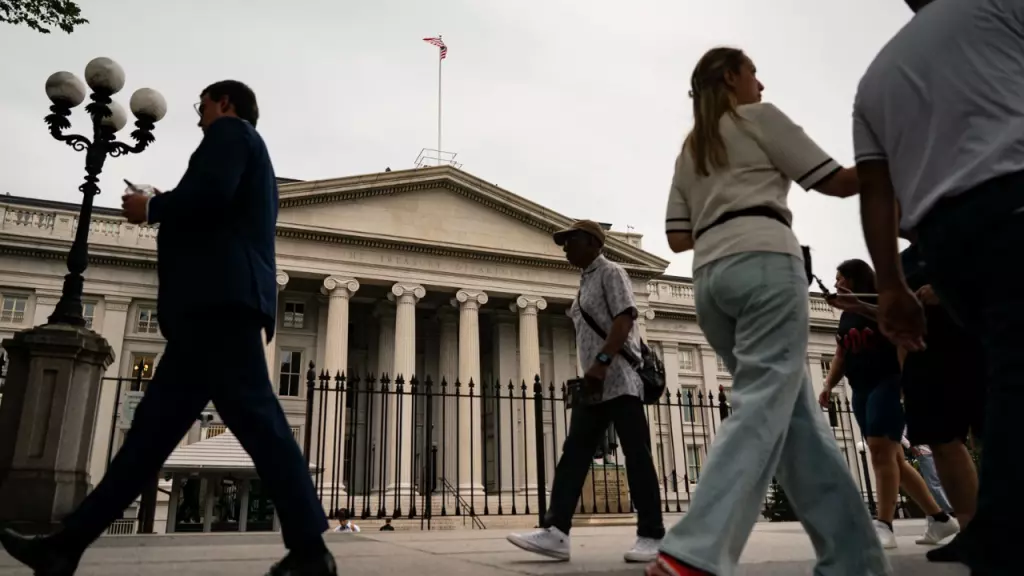
September fed rate chances continue to favor no change after U.S. import prices fell in July, with Kalshi traders giving the Federal Reserve a 71% chance of holding interest rates steady at its September meeting.
The Kalshi September Fed decision market currently prices a 25-basis-point rate hike at 28%, while the chance of a 25-basis-point cut has fallen below 1%. More than $11.2 million has been traded across the market.

The updated odds come after the Bureau of Labor Statistics reported that U.S. import prices fell 0.4% in July while export prices dropped 1.3%. The softer headline figures add to the recent economic data supporting a September hold, although higher nonfuel import prices show that underlying price pressure has not disappeared.
Eligible new users can use Kalshi promo code WINNERS and qualify for up to $500 in bonus credit after completing the current trading requirements. Terms and eligibility requirements apply.
Get Free $30 Credit for Premium Picks + Exclusive Discounts
Subscribe Now
September Fed Hold Chances Sit at 71%
Kalshi traders continue to see keeping interest rates unchanged as the clear favorite for September.
The Federal Reserve's current target range is 3.50% to 3.75%. The Fed maintained that range at its July meeting despite three policymakers voting for a quarter-point increase.
Kalshi now gives the Fed a 71% chance of maintaining that range at the September meeting.
A quarter-point hike remains the main alternative at 28%.
A rate cut has fallen below 1%.
The market therefore continues to lean strongly toward patience even though another hike remains a realistic possibility.
That position has been reinforced by a series of softer economic releases.
Consumer inflation moderated in July, producer prices were unchanged, retail activity has weakened and the labor market has shown signs of slowing.
Tuesday's import and export price report added another soft headline reading.
It did not completely eliminate inflation concerns.
The details of the report showed that declining fuel prices were responsible for much of the drop in overall import prices, while prices for nonfuel imports continued rising.
July Import Prices Fall 0.4% Before Fed Decision
The Bureau of Labor Statistics reported that U.S. import prices fell 0.4% in July.
That followed a revised 0.3% decline in June and represented the largest monthly drop in import prices since May 2025.
Import prices remained 5.9% higher than a year earlier.
Fuel was the biggest factor pushing the headline index lower.
Prices for imported fuel fell 7.2% in July after declining 3.8% in June.
Petroleum and petroleum-product import prices dropped 7.5%.
Natural-gas import prices moved in the opposite direction, rising 5.3%.
The underlying nonfuel picture was considerably firmer.
Prices for nonfuel imports increased 0.4% in July.
Capital-goods import prices rose 0.9%, while prices for imported foods, feeds and beverages also increased 0.9%.
Prices for automotive vehicles, parts and engines increased 0.2%.
That combination gives Fed policymakers a mixed inflation signal.
The overall import-price index declined, but much of that improvement came from falling energy prices rather than broad-based price declines.
Export Prices Drop 1.3% in July
U.S. export prices produced an even larger monthly decline.
Export prices fell 1.3% in July after declining 0.7% in June.
They remained 8.2% higher than a year earlier.
Nonagricultural export prices dropped 1.5% during the month.
Agricultural export prices increased 1%.
The steep decline in nonagricultural prices was driven in part by lower prices for industrial supplies and materials.
Like the import data, the export-price report points toward softer headline price pressure without showing that inflation has disappeared across the economy.
That distinction matters for the Fed.
Policymakers are deciding whether the recent inflation slowdown is strong enough to justify leaving rates unchanged or whether persistent price increases underneath the headline numbers still require another rate hike.
June Import Price Data Was Revised Lower
One of the most significant changes in Tuesday's report involved the previous month's data.
June import prices are now reported as having declined 0.3%.
The earlier report had shown a 0.3% increase.
That revision changes the recent trend considerably.
Instead of July representing the first monthly decline after a June increase, import prices have now fallen in two consecutive months.
June export prices were also revised to a 0.7% decline.
The two-month pattern adds support to the argument that some international price pressure has begun to ease following the sharp increases recorded earlier this year.
Import prices had risen 2.3% in April and 1.7% in May.
The June and July declines therefore represent a meaningful shift from those spring increases.
Why the Import Price Report Does Not Directly Measure Tariffs
The import-price report is particularly important in the current trade environment, but it should not be confused with a direct measurement of U.S. tariffs.
BLS excludes import duties from the prices used to calculate its Import and Export Price Indexes.
Tariffs are taxes and are therefore excluded from the price data used for these indexes.
That does not mean tariffs have no effect on the numbers.
Companies can change prices in response to tariffs.
Businesses can stockpile products before new duties take effect, substitute different products, renegotiate prices with suppliers or absorb part of a tariff through lower margins.
Those responses can influence the prices BLS measures even though the tariff itself is excluded.
That makes the July report useful for understanding international price trends while requiring some caution when interpreting the data as evidence about tariff-driven inflation.
Economists Also Favor a September Fed Hold
Professional economists are even more convinced than Kalshi traders that rates will remain unchanged.
A Reuters poll conducted from August 12 through August 17 found that 94 of 104 economists expect the Federal Reserve to leave its benchmark rate at 3.50% to 3.75% at the September meeting.
That represents approximately 90% of economists surveyed.
The consensus extends beyond September.
Eighty economists expect rates to remain unchanged through the end of 2026.
Twenty-two expect at least one rate increase this year.
Only two expect a rate cut.
That creates an interesting gap between economists and the prediction market.
Kalshi still assigns a 28% probability to a September rate increase, considerably more hawkish than the economist consensus.
Prediction markets can respond quickly when new inflation releases, employment reports, Fed comments or geopolitical developments change expectations.
The July import-price report has not been strong enough to eliminate the market's hike probability.
Why Kalshi Still Gives a Rate Hike a 28% Chance
A 28% probability remains significant even after the softer headline import-price report.
The July data was not uniformly dovish.
While overall import prices fell 0.4%, the decline was driven heavily by a 7.2% drop in fuel prices.
Nonfuel import prices increased 0.4%.
Capital-goods import prices increased 0.9%.
Import prices excluding fuel were also 4.5% higher than a year earlier, their largest 12-month increase since June 2022.
Inflation remains above the Federal Reserve's long-term 2% objective as well.
The central bank made that concern clear at its July meeting.
The Federal Open Market Committee voted 9-3 to keep rates unchanged.
Beth Hammack, Neel Kashkari and Lorie Logan dissented because they preferred an immediate quarter-point rate hike.
That unusually divided decision showed that there is still meaningful support inside the Fed for tighter monetary policy.
If upcoming inflation data strengthens again, those arguments could become more persuasive before September.
Why Fed Hold Chances Remain Above 70%
The case for holding rates is based on more than Tuesday's import-price report.
July producer prices were unchanged after declining slightly in June.
Consumer inflation also came in relatively soft.
The labor market has weakened, including unexpected job losses.
Retail sales have shown softer momentum.
Together, those developments create a different economic environment than the one policymakers faced earlier in the summer.
Higher interest rates can help control inflation by reducing demand.
They can also put additional pressure on employment, consumer spending and economic growth.
If inflation is already cooling while employment conditions deteriorate, the argument for another immediate rate increase becomes weaker.
That tradeoff helps explain why Kalshi traders continue to keep the Hold contract above 70%.
How Import Prices Changed the September Fed Outlook
Tuesday's import-price report reinforced the market's preference for a September hold without producing a dramatic change in the Fed outlook.
Kalshi currently gives the Federal Reserve a 71% chance of maintaining its 3.50% to 3.75% target range.
A 25-basis-point hike remains at 28%.
A quarter-point cut is below 1%.
The headline import and export figures fit the recent pattern of softer economic data.
Import prices fell 0.4%.
Export prices fell 1.3%.
June import prices were revised from an increase to a decline.
The details were less clearly dovish.
Nonfuel import prices increased 0.4%, and several finished-goods categories posted monthly increases.
That helps explain why the hike contract remains close to 30% rather than collapsing after the report.
Traders appear to view the data as another reason for the Fed to wait, but not as proof that inflation risks have disappeared.
The Fed Still Has More Important Data Coming
Tuesday's import-price report will not determine the September decision by itself.
The Federal Reserve will receive additional major economic releases before policymakers meet September 15-16.
The July Personal Consumption Expenditures price index will be particularly important.
PCE is the Fed's preferred inflation measure and will provide another reading on whether underlying inflation is continuing to moderate.
Policymakers will also receive another employment report before the meeting.
That means the balance between inflation and labor-market weakness can still change considerably.
If inflation continues cooling while employment deteriorates, keeping rates unchanged becomes increasingly easy to justify.
If inflation accelerates while the labor market stabilizes, the 28% hike probability could rise quickly.
A 71% Hold probability should therefore be treated as the market's current judgment rather than certainty about the September outcome.
Fed Policymakers Remain Divided
The July Fed decision demonstrated how unusual the current policy environment has become.
The FOMC kept the federal funds target at 3.50% to 3.75%, but three members wanted rates increased by 25 basis points.
The Federal Reserve said economic activity was continuing to expand at a solid pace while inflation remained elevated relative to its 2% goal.
That creates competing risks.
Waiting too long to respond to persistent inflation could allow price pressure to become more entrenched.
Raising rates into a weakening labor market could unnecessarily slow the economy.
Recent data has shifted prediction markets toward the second concern.
It has not completely removed the first.
That disagreement is likely to remain a major part of the September meeting unless upcoming economic reports produce a much clearer signal.
How the September Fed Market Works on Kalshi
Kalshi allows traders to buy contracts tied to the Federal Reserve's September interest-rate decision.
The market currently includes separate outcomes for the Fed maintaining its current rate, raising rates by 25 basis points, cutting rates by 25 basis points and other less likely outcomes.
Contract prices correspond roughly with the market's implied probability.
A Hold contract trading near 71 cents therefore represents an approximately 71% market probability.
A 28-cent probability for a quarter-point hike represents an approximately 28% implied chance.
The prices can change continuously as traders buy and sell contracts.
That makes Fed prediction markets especially sensitive to inflation releases, employment reports, Fed speeches and other economic developments.
A winning contract settles at $1, while a losing contract settles at $0.
Prediction-market prices are not guarantees of future events and can change substantially before the September meeting.
How to Use Kalshi Promo Code WINNERS
Eligible new users can use Kalshi promo code WINNERS when creating an account.
The current Winners & Whiners offer allows qualifying new users to receive up to $500 in bonus credit after completing the required trading activity.
- Create a new eligible Kalshi account.
- Enter promo code WINNERS during registration.
- Complete identity verification.
- Add funds to the account.
- Trade at least $25 on eligible Kalshi Predictions markets within the qualifying period.
- Receive the applicable bonus credit after completing the current requirements.
The exact bonus amount can vary.
Review the current promotional terms, account eligibility requirements and trading conditions before participating.
Prediction-market contracts involve financial risk, and traders can lose the full amount used to purchase a losing contract.
September Fed Rate Chances Outlook
The September Fed market continues to point toward patience after the July import-price report.
Kalshi currently gives the Federal Reserve a 71% chance of holding rates steady, compared with a 28% chance of a quarter-point hike and less than a 1% chance of a cut.
July import prices fell 0.4% and export prices dropped 1.3%.
June import prices were also revised lower, meaning headline import prices have now declined for two consecutive months.
The details were more mixed.
Nonfuel import prices increased 0.4%, and prices for several finished-goods categories continued rising.
That helps explain why the September hike contract remains close to 30% rather than disappearing completely.
The next major inflation and employment releases will provide the Fed with more important evidence before its September meeting.
For now, traders continue to see no change as the clear favorite, but the debate over another rate hike remains alive.