Trump Canada Tariff Chances Fall to 40% on Kalshi
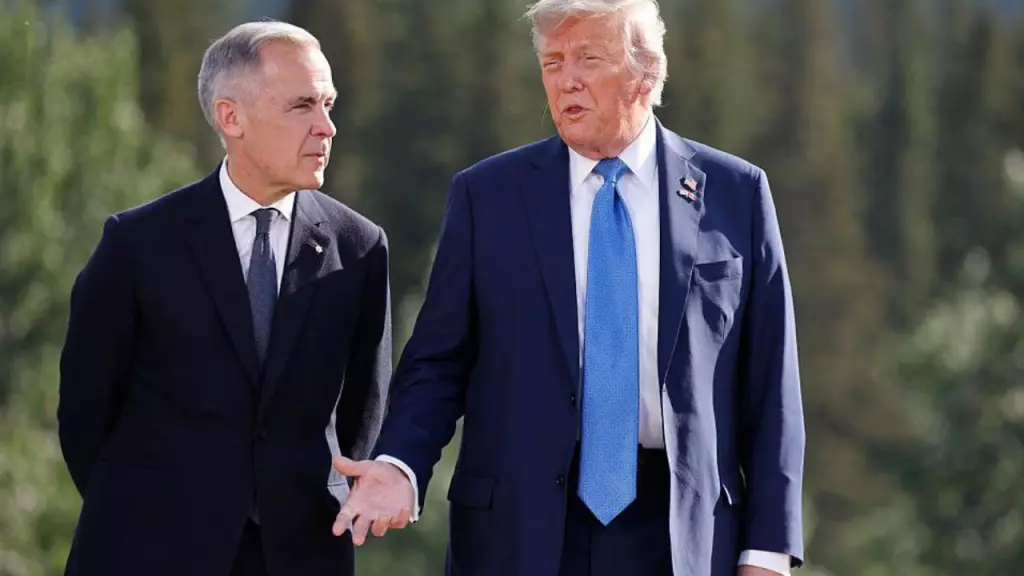
Trump Canada tariff chances have fallen to about 40% as traders increasingly lean toward the new 50% U.S. duties on certain Canadian goods not taking effect as scheduled on Aug. 19.
The Kalshi market on whether Trump's 50% tariffs on Canada will take effect Aug. 19 is now around 40% for Yes, down from the roughly 45% level seen earlier in the week.

That shift comes even though the White House has not withdrawn or delayed the measures. The relevant proclamations still call for the additional duties to begin at 12:01 AM ET on Wednesday, Aug. 19, leaving U.S. and Canadian negotiators only hours to reach an agreement or secure a delay.
Eligible new users can use Kalshi promo code WINNERS and qualify for up to $500 in bonus credit after completing the current trading requirements. Terms and eligibility requirements apply.
Get Free $30 Credit for Premium Picks + Exclusive Discounts
Subscribe Now
Trump Canada Tariff Chances Fall to 40%
Prediction-market traders have become less convinced that the new Canadian tariffs will begin on schedule.
The Kalshi Yes probability is now around 40%.
That means traders are assigning roughly a 60% chance to an outcome in which the announced tariffs do not take effect on Aug. 19 as currently written.
The change is notable because there has been no corresponding cancellation from the White House.
Three presidential proclamations issued in July still impose additional 50% duties on specified Canadian products beginning at 12:01 AM ET on Aug. 19.
The lower Kalshi probability therefore appears to reflect expectations of a last-minute agreement, delay, modification or other intervention rather than a change that has already occurred.
That distinction matters with less than a day remaining before the scheduled implementation.
Trump and Carney Spoke Before the Tariff Deadline
Canadian Prime Minister Mark Carney and U.S. President Donald Trump have spoken directly as both governments attempt to prevent the dispute from escalating.
Reuters reported Tuesday that Carney and Trump spoke Monday afternoon about the ongoing trade negotiations.
The Canadian government did not provide detailed information about what the two leaders discussed.
The call came while senior Canadian officials remained in Washington for negotiations with the Trump administration.
Canada's minister responsible for U.S. trade, Dominic LeBlanc, and chief trade negotiator Janice Charette have been in Washington since last week.
They met Monday for nearly two hours with U.S. Trade Representative Jamieson Greer and Commerce Secretary Howard Lutnick.
Those discussions have continued with the Aug. 19 tariff deadline approaching.
The fact that negotiations remain active helps explain why traders have not simply moved the Kalshi Yes contract toward certainty despite the existing presidential orders.
Aug. 19 Tariff Deadline Remains Active
The legal starting point has not changed.
The White House proclamations specify that the additional duties apply to covered goods entered for consumption, or withdrawn from warehouse for consumption, beginning at 12:01 AM ET on Aug. 19.
The measures were issued under Section 338 of the Tariff Act of 1930.
President Trump used that authority to impose additional tariffs in response to what the administration describes as discriminatory Canadian treatment of U.S. commerce.
The White House actions focus on three major areas of disagreement: dairy products, alcoholic beverages and motor vehicles.
The administration says the measures are intended to offset disadvantages imposed on U.S. producers by Canadian trade policies.
Unless the White House expressly reduces, modifies, suspends or terminates the proclamations, the duties remain scheduled to take effect Wednesday.
That is what makes the declining Kalshi probability particularly interesting.
The formal policy currently points toward implementation.
The prediction market increasingly points toward intervention before the deadline.
Auto Tariffs Remain a Major Sticking Point
Automobiles remain one of the biggest obstacles in the negotiations.
Reuters reported that U.S. and Canadian officials have discussed reducing existing U.S. Section 232 tariffs on Canadian vehicles from 25% to 15%.
The potential agreement could include additional reductions based on the amount of qualifying content contained in each vehicle.
The two countries remain divided over how that content should be calculated.
Washington wants tariff deductions based primarily on U.S.-produced content.
Canada is pushing for a broader North American calculation that would include Canadian and Mexican components.
That difference can have major financial consequences for an industry built around highly integrated North American supply chains.
Vehicles and parts can cross the U.S.-Canada border several times during manufacturing.
A rule that credits only U.S.-made components can therefore produce a much higher effective tariff than one that recognizes Canadian and Mexican content as well.
Reuters reported Tuesday that it remained unclear whether negotiators could bridge that divide before the deadline.
What Trump's New Canada Tariffs Cover
The new measures do not impose an additional 50% tariff on every Canadian product entering the United States.
They target covered products identified in the three White House proclamations.
The administration's July fact sheet said the affected categories range from wine and other alcoholic beverages to dairy goods, automobiles, hockey equipment and cement.
The White House says energy, potash, products already subject to certain Section 232 tariffs and some other categories are excluded.
The new duties also differ from earlier U.S. tariffs because the Section 338 measures can apply to covered goods even when those products would otherwise qualify for preferential treatment under the U.S.-Mexico-Canada Agreement.
Reuters estimates approximately $20 billion in Canadian imports could be affected.
That represents only a portion of total U.S.-Canada trade, but the effects could be concentrated heavily among particular businesses and industries.
Lumber, wine, dairy and other sectors with significant U.S. exposure could face particularly large adjustments if the duties begin Wednesday.
Why Kalshi Traders Are Leaning Toward a Delay
The market has several reasons to remain skeptical that the announced tariffs will begin exactly as scheduled.
Negotiations are still taking place.
Trump and Carney have communicated directly.
Senior officials from both countries remain engaged.
The U.S. and Canada are discussing changes to existing automotive tariffs that could become part of a broader compromise.
The White House also retains authority under Section 338 to modify, suspend or revoke the tariff proclamations.
That gives the administration several ways to change the outcome before the deadline without abandoning the broader trade negotiations.
Trump could postpone implementation while discussions continue.
The administration could narrow the affected products.
The two governments could reach a partial agreement.
The White House could modify one or more of the proclamations while leaving other measures intact.
Any of those developments could materially alter the Kalshi contract.
The market's move from around 45% toward 40% suggests traders currently see those possibilities as somewhat more likely than they did earlier.
Why the Tariffs Could Still Take Effect
A 40% probability is still substantial.
The White House has already completed the formal steps needed for the duties to begin.
There is also no publicly announced agreement eliminating the Aug. 19 deadline.
Major disputes remain unresolved.
The automobile-content calculation is one of them.
The Trump administration has also repeatedly criticized Canada's dairy supply-management system.
Canadian restrictions on U.S. alcoholic beverages have become another point of conflict.
Those issues go beyond a single tariff announcement.
They form part of the wider disagreement over the future of the North American trade relationship.
If negotiators cannot produce enough progress to satisfy the administration, the White House can simply allow the existing proclamations to take effect.
That is why Yes remains near 40% rather than collapsing toward zero.
What Happens if the 50% Canada Tariffs Begin?
Covered Canadian goods entering the United States would face an additional 50% duty beginning Wednesday if the measures take effect as written.
The impact would vary significantly by product and industry.
Companies could attempt to absorb some of the added cost.
Others could raise prices.
Canadian producers could redirect shipments to other markets or reduce U.S. exports.
American businesses that depend on affected Canadian inputs could seek alternative suppliers.
Smaller companies with limited supply-chain flexibility may face more difficulty adjusting than large multinational businesses.
The broader economic impact could be smaller than the headline 50% rate suggests because the measures apply to a limited share of total Canadian exports to the United States.
The industry-level impact could still be severe.
Businesses concentrated in affected categories could suddenly face a dramatically different cost structure.
There is also the possibility of additional Canadian retaliation.
Canadian officials have said multiple responses remain available if the tariffs take effect.
That could turn a targeted tariff action into another broader round of trade restrictions.
A Tariff Delay Would Not End the Trade Dispute
A No resolution on Kalshi would not necessarily mean relations between the United States and Canada have normalized.
The two governments are negotiating across multiple trade issues.
Existing U.S. tariffs on Canadian automobiles would remain important even if the new Section 338 measures were postponed.
The countries are also dealing with disputes involving steel, aluminum, lumber, dairy, alcohol and broader USMCA rules.
A delay could simply give negotiators more time.
A partial agreement could resolve one sector while leaving others unsettled.
The administration could also postpone the Aug. 19 duties and use them as leverage in continued negotiations.
That means the immediate Kalshi contract is narrower than the overall U.S.-Canada trade dispute.
It asks whether these specific additional tariffs begin on Aug. 19.
It does not ask whether Trump will continue pursuing tariffs against Canada more broadly.
Why the Kalshi Canada Tariff Market Can Move Fast
The contract is approaching a binary deadline.
That can produce unusually sharp price changes.
A new White House announcement could move the market within minutes.
So could a statement from Carney or other Canadian officials.
Confirmation that negotiations have failed could drive the Yes probability higher.
A reported agreement or implementation delay could send it sharply lower.
The current move from about 45% to roughly 40% is meaningful, but relatively small compared with the moves that could follow an official government announcement.
This is especially true because the contract is scheduled to resolve around an event occurring within hours rather than months.
There is little time left for uncertainty to persist.
How the Kalshi Canada Tariff Market Works
Kalshi's contract asks whether Trump's additional 50% tariffs on Canada will take effect on Aug. 19.
Traders can take Yes or No positions based on whether they expect the contract's resolution conditions to be met.
A Yes contract priced around 40 cents corresponds with an implied probability of roughly 40%.
If the market ultimately resolves Yes, a winning Yes contract settles at $1.
If the market resolves No, the Yes contract settles at $0.
The reverse applies to No contracts.
Prices can change continuously as traders react to news and place new orders.
The contract's precise resolution language matters.
A broader announcement about U.S.-Canada trade negotiations does not automatically determine the result.
Traders should examine whether the specific additional tariffs covered by the market actually begin applying to covered Canadian goods on Aug. 19.
How to Use Kalshi Promo Code WINNERS
Eligible new users can use Kalshi promo code WINNERS when creating an account.
The current Winners & Whiners offer allows qualifying new users to receive up to $500 in bonus credit after completing the promotional requirements.
There is no minimum qualifying deposit requirement under the current offer.
Instead, eligible new users must complete identity verification and trade at least $25 on Kalshi Predictions within 30 days of opening the account.
- Create an eligible new Kalshi account.
- Enter promo code WINNERS during registration.
- Complete the required identity verification.
- Add sufficient funds to complete the qualifying trading activity.
- Trade at least $25 on Kalshi Predictions within 30 days.
- Receive the applicable bonus credit if the current promotional conditions are satisfied.
The exact bonus amount varies.
Bonus credit is subject to additional trading and expiration requirements.
Review the current promotional terms and eligibility conditions before participating.
Prediction-market contracts involve financial risk, including the possibility of losing the full amount used to purchase a losing contract.
Trump Canada Tariff Chances Outlook
The Aug. 19 tariff deadline is now only hours away, and the disagreement between the formal U.S. policy and the prediction market has become clearer.
The White House proclamations still call for additional 50% duties on specified Canadian goods to begin at 12:01 AM ET Wednesday.
Kalshi traders are assigning only about a 40% chance to that outcome.
That means the market increasingly expects some form of agreement, delay or modification before implementation.
There is still no guarantee that happens.
U.S. and Canadian negotiators remain divided on important issues, particularly the treatment of automotive content.
If the talks break down, the existing proclamations can take effect without another major policy announcement.
If negotiators make enough progress, the White House still has time to change course.
For now, the market has moved toward delay, but the Canada tariff fight remains unresolved heading into the final hours before Aug. 19.